
Bangladesh Women and Children’s Health Improvement Project
Project Proposal
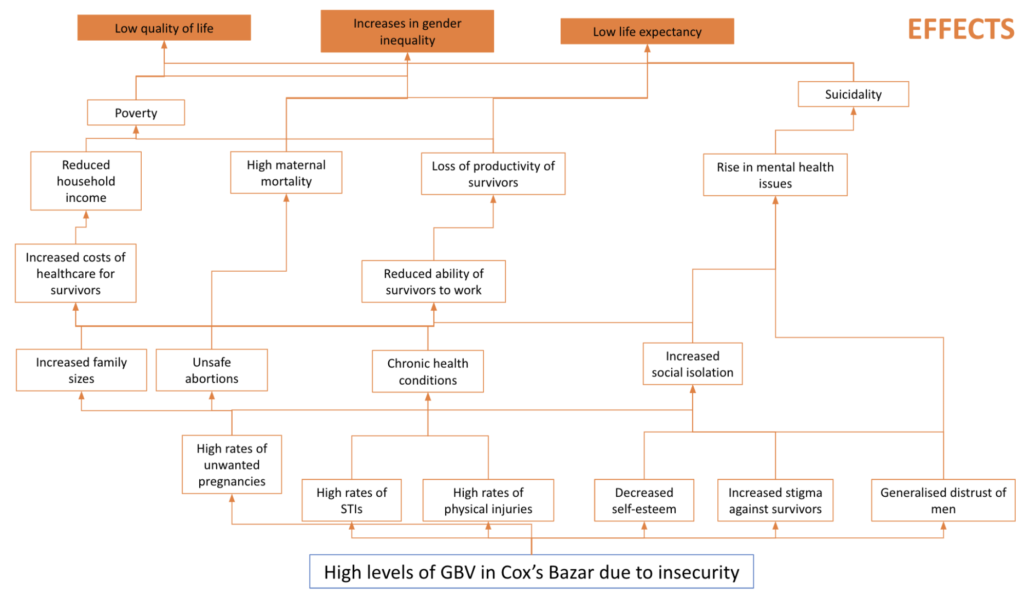
There is a high prevalence of gender-based violence (GBV) experienced among Rohingya women and young girls seeking refuge in Cox’s Bazar, Bangladesh. GBV can be defined as ‘acts that inflict physical, sexual or mental harm or suffering, threats of such acts, coercion, and other deprivations of liberty’ (IASC, 2015, p. 5). The most common forms of GBV toward women and young girls within Cox’s Bazar are physical, sexual, mental and intimate partner violence. The main impacts of GBV include increases in physical and sexual injuries, including STIs and unwanted pregnancies, poor mental health, social isolation, and negative impacts on productivity and quality of life, including lowered life expectancy. The project will be implemented in Cox’s Bazar.
To address the high levels of GBV towards women and young girls in Cox’s Bazar, we will focus on:
- Creating safe environments for women and young girls, focussing on areas where GBV commonly occurs, including around WASH facilities and water collection points
- Addressing the educational awareness of, and cultural attitudes towards, GBV, through:
- Challenging cultural norms of womens’ roles
- Increasing reporting rates of GBV incidences
REDUCING GBV AMONG ROHINGYA WOMEN – The Australian-Bangladeshi Collaboration (ABC)
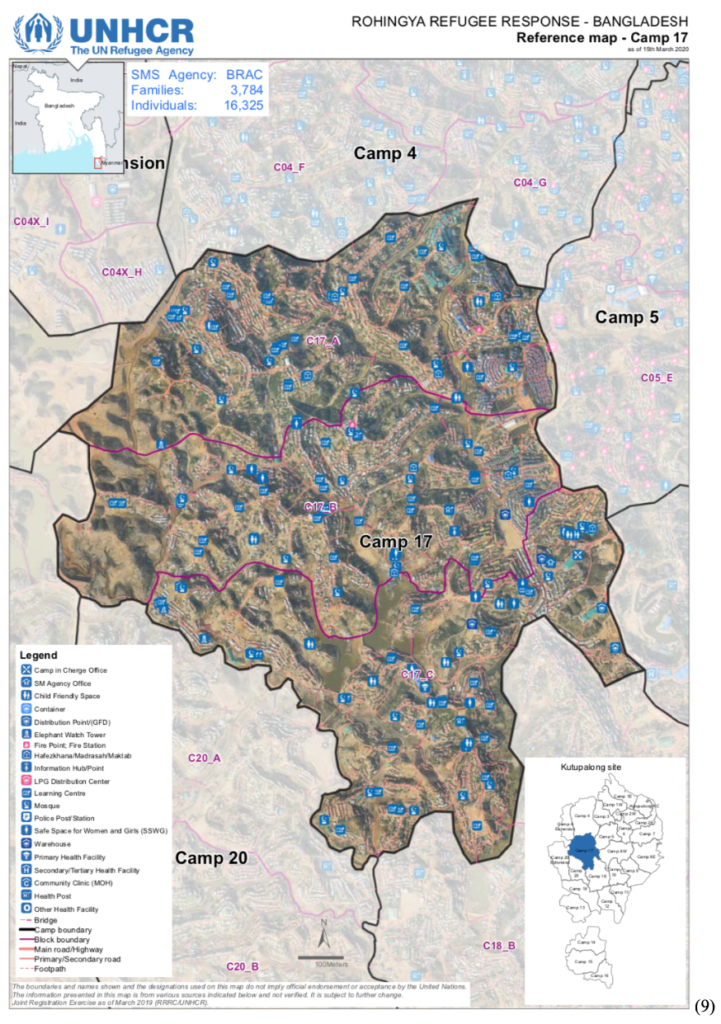
CAMP 17, COX’S BAZAR, BANGLADESH
2.0 Background Situation
2.1 Problem to address
The UNHCR report states that gender-based violence (GBV) disproportionately affects women and girls, but GBV prevalence dramatically increases when women and girls are in a situation of displacement.(1) Another report found that women and girls in humanitarian settings are more likely to be victims of violence, with 70% of women in humanitarian settings experiencing GBV compared to 30% of women worldwide.(2) Rooted in gender inequality, gender-based violence is considered one of the most significant human rights violations in all societies.(3) As signified by its name, gender-based violence is violence that is “directed against a person because of their gender”.(3) Both genders can experience GBV, but worldwide women and girls experience the vast majority of GBV incidences. Gender-based violence can take many forms, including intimate partner violence (IPV), sexual violence, threats of violence, female genital mutilation (FGM), coercion, manipulation, and child marriage. It can cause physical, mental, sexual and economic harm and even death, to those GBV is inflicted upon (2). It is imperative to address GBV. Besides the harm it causes, the effects also spread to survivors’ family members and community due to the immediate impacts on the survivor’s general wellbeing and the survivor’s ability to productively participate within society (5). Additionally, GBV puts extra strain on health and legal systems in contexts that are often under-resourced to begin with (5).
2.2 Project context
The Rohingya are considered among the world’s most vulnerable refugee communities, which puts Rohingya women and girls living in Cox’s Bazar refugee camp at even greater risk of experiencing GBV (4). The IRC have estimated that one in four Rohingya women and girls living in Cox’s Bazar are survivors of GBV, and that 81% of reported GBV incidences were perpetrated by an intimate partner (6). The recent and ongoing COVID-19 pandemic poses additional risks to GBV incidences mainly because families are confined to their living quarters more often for quarantine and public health measures. COVID-19 has also delayed or interrupted existing programmes that were targeting GBV and has negatively impacted GBV reporting rates. However, prior to COVID-19, the IRC reported that of the girls and women screened at Cox’s Bazar, over 27% of them had reported a personal incidence of GBV occurring each month (6). Of these incidences:
- 57% reported physical assault
- 22% reported being denied resources and opportunities by a domestic partner
- 16% reported emotional or psychological abuse
- 3% reported rape or other forms of sexual assault (6).
2.3 Political and economic context
The Rohingya are an ethnic Muslim minority group, totalling approximately 3.5 million people worldwide, with over a million living in the Rakhine state in Myanmar (7). Myanmar is a predominantly Buddhist country and its government policies have been discriminatory towards the Rohingya people since the 1970’s. This pushed hundreds of thousands of Rohingya people to flee Myanmar, mainly to the neighbouring country of Bangladesh. In 2017 the Rohingya people suffered a renewed level of discrimination and experienced a significantly increased rate of violence that saw the Rohingya from the Rakhine state raped, burned, and murdered (7). As a result, over one million Rohingya have now fled their homes in Myanmar and reside in what is now the world’s largest refugee camp, Cox’s Bazar. The Rohingya people are not recognised as citizens by the Myanmar government, and the Bangladeshi government will not grant them citizenship either, leaving over one million people effectively stateless (7). Their reality today, living as stateless people in Cox’s Bazar, means they have no formal justice system, no legal rights, restricted access to aid, and no right to work for a living (8).
2.4 Target population and number impacted
The Australian-Bangladeshi Collaboration project will target Camp 17. Camp 17 was a strategic choice; the lack of literature and limited number of humanitarian initiatives completed by other NGO’s in Camp 17 highlighted this camp as one that could experience the largest impact. Due to the nature of gender-choice; the lack of literature and limited number of humanitarian initiatives completed by other NGOs in Camp 17 highlighted this camp as one that could experience the largest impact. Due to the nature of gender-based violence, the ABC project will target men and women within Camp 17, a population of 7,915 and 8,410 respectively (9). As the different components of ABC’s project target different aspects and causes of GBV, the number of individuals impacted ranges. At the end of the project, it is expected that:
- Component 1 will impact 3,077 women
- Component 2 will impact 2,199 women and 1,735 males, and
- Component 3 will impact 3,500 females and 150 males.
It is worth noting that while some Rohingya refugees may benefit from all programs, not all Rohingya refugees who benefit from one component will also be directly impacted by another component. This could be due to the location of housing, willingness to participate, and many other factors. However, the sustainability of ABC’s project will ensure that the positive programs and effects will continue long after the project’s end date and will continue its impact throughout Camp 17.
2.5 Project Proposal
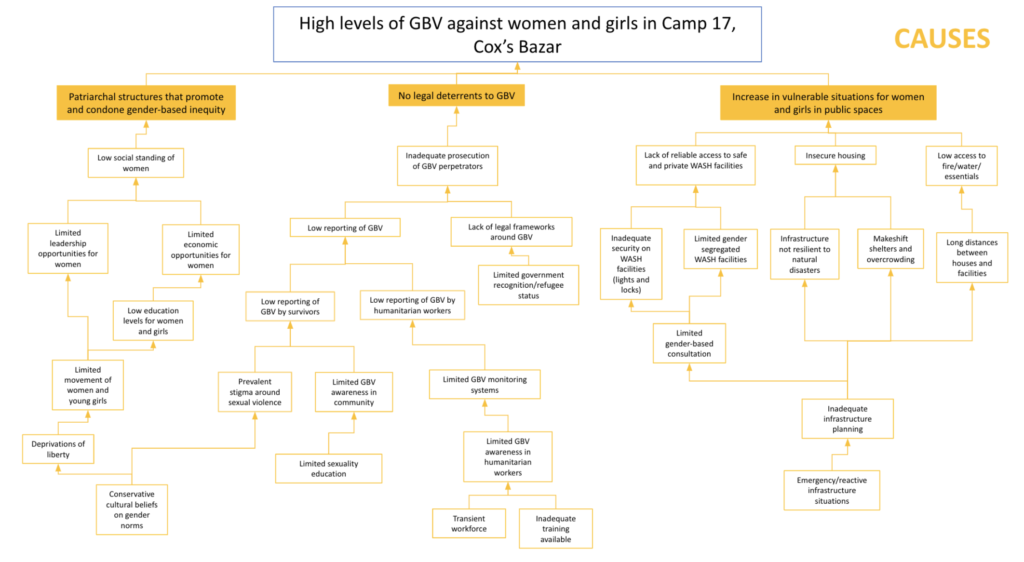
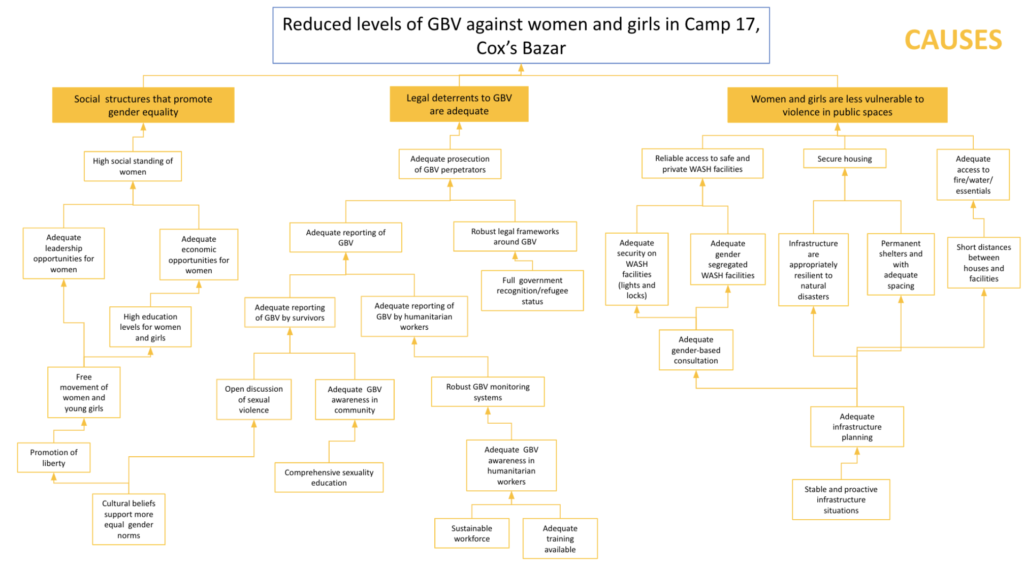
As the Australian-Bangladeshi Collaboration (ABC), a comprehensive assessment has been undertaken to assess the causes of gender-based violence against Rohingya women and girls in Cox’s Bazar. A detailed summary is presented in the Problem Tree in the annex of this report. It found three key concerns that led to gender-based violence perpetration. These concerns form the individual components of the project and have been coupled with the impact of the problem on our target population.
Component 1 – Unequal Gender Norms: The widespread acceptability of GBV among Rohingya women and men due to culturally-bound notions of unequal gender norms are important drivers of GBV in the Rohingya community. Within these beliefs, GBV is justified by both genders if women do not perform gendered household duties, such as cooking and cleaning (10,11). Social norms around ‘purdah’ limit Rohingya women’s mobility within the camps with 46% of Rohingya women in one survey reporting that they spend 21 to 24 hours a day in their shelters (11,12). Limited mobility and access to gender-segregated public spaces limit women’s opportunity to gather and interact with, and learn from, each other (10).
Component 2 – Limited Economic Opportunities for Women: IPV is the most prevalent form of GBV experienced in humanitarian settings (16), with the root cause being patriarchal gender norms and power imbalance (16). Rohingya women are often confined to their home (10), resulting in dependence on their partner and limited to no access to education, training, and work. Additionally Rohingya people within Cox’s Bazar live under extreme hardship, in particular financial(21), with no legal working rights (22), and strict CFW regulations enforced by the Bangladesh government.
Component 3 – Unsafe WASH Facilities: Access to safe and hygienic sanitation facilities is a priority for the displaced Rohingya population of Cox’s Bazar. Poor WASH facility design and infrastructure (lack of gender segregation, lighting, and locks) are factors contributing to GBV through a breach in safety and increased number of vulnerable situations for females using communal facilities. Household surveys of Camp 17 revealed that 26% of girls and women reported feeling unsafe when accessing or using communal WASH facilities, yet up to 87% are still using these facilities (28).
2.6 Rationale
ABC will implement activities based upon these three components to address the multifaceted causes of GBV. ABC have also decided on a 5-year timeline to maximise effectiveness and reach of the activities and program. The rationale of each component is:
- Women’s and girls’ safe spaces (WGSS) is a well-established intervention in GBV prevention and is oneof the standards featured in the Inter-Agency Minimum Standards for Gender-Based Violence in Emergencies Programming (13). Establishing women’s groups and attending women’s empowerment initiatives in WGSS are seen by Rohingya women as ways to decrease their dependence on men and to encourage joint decision-making (11). Programs such as ‘Engaging Men through Accountable Practice’ (EMAP) aim to transform men’s attitudes and behaviours towards GBV and have been shown to reduce acceptance of GBV, decreased the intention to commit GBV and improved participation in gendered household activities among male participants (14,15).
- Women’s economic empowerment interventions including vocational training (VT) and cash-for-work (CFW) programs have been shown to improve gender parity. However, CFW can create changes in power dynamics within intimate relationships and increase risk of IPV (17). To mitigate this and ensure sustainable IPV reduction, Gender Dialogue Groups (GDG), delivered alongside CFW equip couples with skills to communicate, negotiate, and jointly plan household financial decisions. Economic empowerment programs coupled with GDG have been evaluated in several settings, including conflict zones and humanitarian settings, and have demonstrated reduced IPV (17,18,19). ABC has chosen to use the Economic and Social Empowerment (EA$E) GDG as recommended by ‘Guidelines for Integrating Gender-Based Violence Interventions in Humanitarian Action’ (20).
- Many toilets and bathing facilities in emergency humanitarian settings are constructed with inadequate security (lack of adequate lighting and secure internal locks) and without gender-segregation, increasing the risk of GBV when women use communal facilities. There is often limited community consultation before the installation of WASH facilities and poor operations and maintenance (O&M) plans in place thereafter. ABC have decided to create safe communal WASH facilities in consultation with the community to prevent GBV incidents occurring and establish O&M committees focusing on involvement of women as committee members to ensure their sustainability.
2.7 Stakeholder Analysis
| List of Stakeholders | Outcome Achieved through the Project | Power or Influence | Level of Interest |
| Primary | |||
| Rohingya women in Camp 17 | Reduced violence against women; improved safety and reduced negative health impacts; economic and social empowerment | High | High |
| Rohingya men in Camp 17 | May oppose activities that empowering women socially and economically. Reduced perpetration of GBV with acceptance of initiatives | High | Moderate |
| Secondary | |||
| Religious or community leaders | Poor acceptance if activities deviate too much from cultural norms. Encourage community engagement by acting as local champions | High | Moderate |
| Majhi | Majhi is not known to be supportive of GBV survivors. Majhi may feel challenged by Rohingya women’s empowerment | Moderate | Low |
| Camp-in- charges (CiC) | Responsible for site management and therefore has influence over built structures such as WGSS and WASH facilities | High | Low |
| UNHCR | Benefit from partnership through improved standards of campsite facilities and maintenance, safety of community and health outcomes of women | Moderate | Moderate-High |
| External | |||
| Government of Bangladesh (GoB) | Can enact policies governing Rohingya people that can impact project implementation, including providing access to Camp 17 and provision of cash-for-work (CFW) payments | High | Low |
| Bangladeshi host community | May be opposed due to perceived preference in programming aimed at the Rohingya community. Bangladeshi members will benefit from employment as staff in project implementation. | Moderate | Moderate |
| Relief International (RI) | RI is an INGO that provides GBV prevention, case management services, and health services in Camp 17. RI may compete for donor funds, but ABC would benefit from partnering with RI to provide GBV case management services. | Moderate | Moderate |
| International Rescue Committee | Primary developers of EA$E and EMAP with interest in M&E outcomes of programs implemented. | Low | Low |
3.0 Project Design
3.1 Project Objectives
The specific goal, purpose and outputs of the project are listed below:
Project Goal: To reduce GBV against women and girls by 30% in Camp 17, Cox’s Bazar by 2028.
Project Purpose: Reduce acceptability of gender inequality and GBV; improve perception of women’s roles in household financial decision making and household dynamics; and improve safety for women at communal WASH facilities.
Project Outputs:
- Rohingya women and girls aged 15-49 in Camp 17 have attended GBV awareness and women’s empowerment sessions at WGSS
- Rohingya men in Camp 17 have completed 16-week EMAP workshop
- Rohingya women in Camp 17 have attended VT, CFW programs and/or EA$E GDG program
- Increased availability of safe communal WASH facilities (with secure internal locks, adequate lighting, and gender-segregation where applicable)
Project Activity Description:
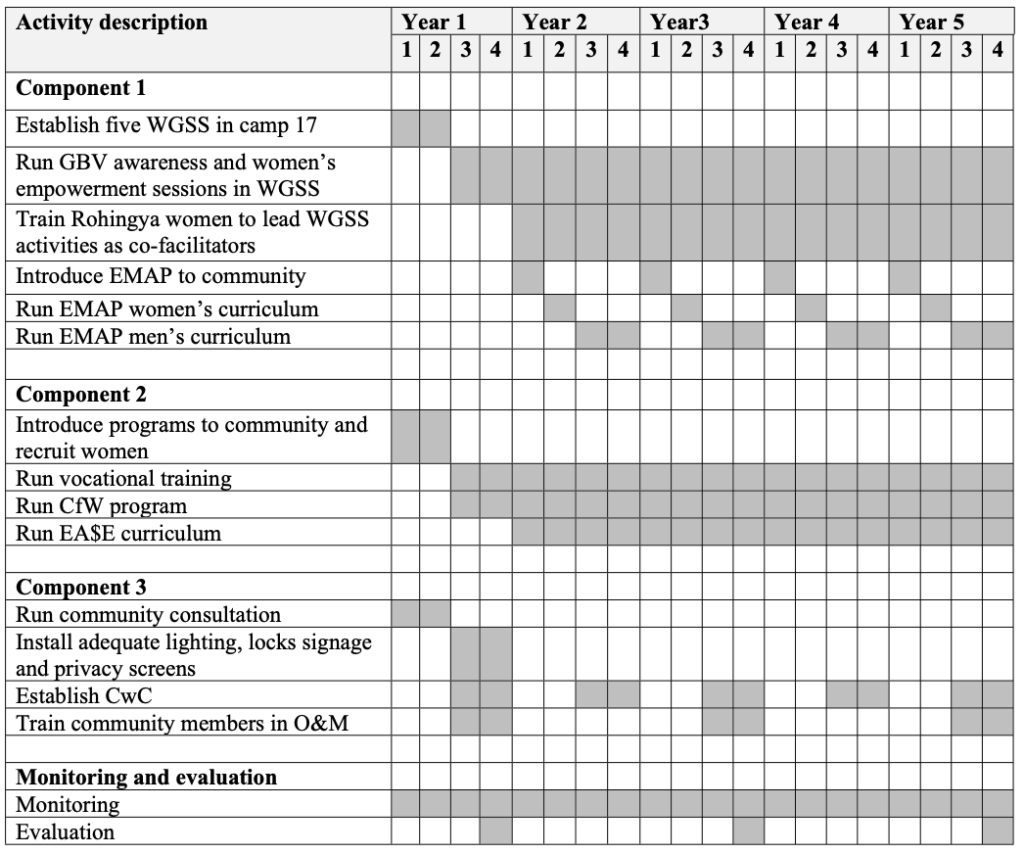
This project aims to address the cultural, social, and physical drivers of GBV that are unique to the Rohingya people. Using a culturally and socially sensitive approach in accordance with the directive from the Government of Bangladesh (GoB) and UNHCR, the project aims to prevent and mitigate the risk of GBV to girls and women of Camp 17, Cox’s Bazar. The three project outputs and activities are detailed below, and additional information can be found within the Logical Framework and Activity Schedule (Annex D & G).
3.2 Project Activity Description
Component 1 – Unequal Gender Norms
Output 1: Rohingya women and girls in Camp 17 have attended GBV awareness and women’s empowerment sessions at WGSS.
Activity 1.1 Establish five WGSS in Camp 17: Five WGSS will be built in the safest and most accessible locations within Camp 17, following consultation with Rohingya women and girls. The WGSS will be staffed at a minimum by a manager in charge of WGSS operations, a facilitator to run WGSS activities and an outreach officer who undertakes awareness-raising activities with community members and leaders. Activity 1.2 Run GBV awareness and women’s empowerment sessions in WGSS: Activities will be run within WGSS to develop women’s and girls’ social supports while enhancing their awareness of GBV and challenging unequal gender norms. Activities include group recreational activities such as sewing groups and educational sessions on topics such as GBV awareness and women’s rights. Each WGSS activity is facilitated by a WGSS facilitator. Activities that involve other sectors (e.g., health, protection) or a specific curriculum (e.g. EMAP) will be co-facilitated with a staff from the respective sector or curriculum. Activity 1.3 Train Rohingya women and girls as WGSS volunteers to lead WGSS activities: WGSS members will be encouraged to develop their leadership skills through a formal shadowing process, where interested members observe staff in day-to-day running of a WGSS activity over a three-month period. They are then invited to run aspects of the observed activity alongside staff as a volunteer co-facilitator.
Output 2: Rohingya men in Camp 17 have completed 16-week EMAP workshop
Activity 2.1 Introduce EMAP to community (project sensitisation sessions): EMAP facilitators will engage with community leaders and members through meetings to introduce EMAP and its aims. This phase will develop community buy-in into the program and to identify women and men who are interested in participating, who will be contacted during the recruitment phases of the women’s and men’s curriculum.
Activity 2.2 Run EMAP women’s curriculum: The 8-week women’s curriculum group, which meets weekly, allows Rohingya women in Camp 17 to determine priority areas in GBV prevention to be included in the men’s curriculum. The curriculum will explore gender and gender roles and the different types of GBV and their determinants and will end with the women deciding on the key messages to be included in the men’s curriculum. The women will be encouraged to develop strategies to continue contributing to GBV prevention in the community following the curriculum. The sessions will run in WGSS.
Activity 2.3 Run EMAP men’s curriculum: The 16-week men’s curriculum, which also meets weekly, will run following the women’s curriculum. It will encourage Rohingya men in Camp 17 to explore gender norms and GBV, its determinants and consequences on women. It aims to equip Rohingya men with skills, qualities and strategies to become allies in GBV prevention. The content of the sessions will be guided by the EMAP Implementation Guide, incorporating the key messages identified by the women during the women’s curriculum phase and adapted to the needs of camp 17. The sessions will be run in a community centre or a mosque.
Component 2 – Limited Economic Opportunities for Women
Output 3: Rohingya women in Camp 17 have attended vocational training workshops, CFW programs and/or EA$E GDG programs.
Activity 3.1: Recruit staff and introduce programs to community (project sensitisation sessions)
ABC will recruit and train local Bangladeshi women as economic empowerment supervisors and economic empowerment officers; and local Rohingya women as VT facilitators. All staff will be provided training on GBV; GBV safety procedures and referral pathways. Extensive community consultation will be conducted and permission sought from religious leaders to run the women’s economic empowerment programs. Contextual modifications will be made to each activity in consultation with stakeholders. Relevant staff will organise resources, materials, and appropriate venues for activities including WGSS to facilitate activities. Local Rohingya women will then be recruited to participate in economic empowerment program.
Activity 3.2: Run vocational training
VT (sewing and soap making) of one-month duration will be provided to groups of 20 women aged 15-49. Training sessions will be carried out in WGSS and be facilitated by Rohingya women within Camp 17 with existing skills.
Activity 3.3: Run CFW program
Women who have 3.2 will be invited to participate in CFW to make dignity kits. The contents of the kits will be based on community consultation with local Rohingya women. Recycled material to make the kits will be donated by a local textile manufacturer. Women will be reimbursed based on hours worked and paid via mobile phone cash transfer process. Safety measures will be in place to enable flexible work hours and allow working in WCSS or from home, to respect the practice of purdah (26). Women will be invited to work over the 5-year project.
Activity 3.4: Run EA$E GDG curriculum
Six months after commencing the VT (once the women feel comfortable and are familiar with one another), a female economic empowerment officer and male EMAP worker will co-facilitate the EA$E GDG (8 x 1.5- 2.5hrs sessions). Sessions will be delivered over a 16-week period within a designated safe space (such as a community health centres). Each GDG will consist of 20 women and their partners. GDG focuses on finances, budgeting, communication and negotiation skills. Themes challenging gender roles and violence are integrated into the series to address gender norms regarding financial decisions in the household. A one- month consultation with women, their partners and religious leaders will be conducted before roll-out of GDG, to encourage male attendance (27). The program will be modified after each 10-month cycle based on the monitoring and evaluation.
Component 3 – Unsafe WASH Facilities
Output 4: Increased availability of safe communal WASH facilities (defined by adequate lighting, internal locks on doors and gender-segregation where applicable).
Activity 1.1: Ensuring adequate lighting at WASH facilities at all times of day. A lack of lighting is one of the main issues compromising women’s safety at WASH facilities in Camp 17 (29). The number of functional streetlights in Camp 17 has doubled in the last 12 months, however, there is a gap in the number of households with access to portable lamps (30). 250 households will receive d.light solar lanterns. Site assessment conducted at baseline will locate areas with poor public lighting around existing WASH facilities and needs assessment (FGDs with women) will be used to elucidate which households in these areas have the greatest need for portable lighting. Access to lighting is gendered, and by distributing two solar lamps per selected household, it reduces the discussion around who has priority (31).
Activity 1.2: Installing secure internal locks on communal WASH facilities
Activity 1.3: Installation of signage and privacy screens to support gender-segregation of communal WASH facilities. All existing latrines and bathing facilities will have secure internal locks placed on doors to provide safety and prevent access while in use. Where appropriate, based on site assessment findings, screens for privacy will also be installed to avoid looking into occupied facilities. Given the poor literacy rates of adults (32), pictorial signage to label male and female facilities will also be installed to enforce segregated facilities aiming for 3:1 female to male facilities in line with SPHERE guidelines. Construction will be carried out as part of a CFW program for camp residents. FDGs conducted during the needs assessment will identify community members with construction skills with the highest economic needs to participate in CFW.
Activity 1.4: Establishing Community WASH Committees (CWC)
Activity 1.5: Train local community members in Operation and Maintenance (O&M) of safe WASH facilities. O&M is central to ensuring sustainability of WASH interventions and infrastructure. We aim to mobilise the community and establish CWC to encourage active participation in O&M. During the needs assessment phase, FGDs will take place to appoint CWC members. We aim for 50% of members to be female. Each committee has ten members and one supervisor. Initially, 10 CWC will be piloted in the first 12 months and based on evaluation, additional CWC will be established each year. A trusted male CWC member will also be appointed as a safety patrol to police unsafe zones, such as long walking routes to WASH facilities. All CWC members will undergo a 10-day intensive training including maintenance of small-scale infrastructure, waste management, hygiene promotion and GBV awareness. Each committee will receive a toolkit to make small-scale repairs. O&M costs will be covered for 12 months, then it is expected that the CWC will assume all operations and costs. It is also expected that these “graduates” will then continue to run Train the Trainer workshops after 24 months of O&M duties. Ideally, there will be a CWC per 25-50 households by the project completion.
3.3 Project Indicators
Project Goal: A 30% reduction in Rohingya women and girls aged 15 – 49 in Camp 17, who reported experiencing GBV in the last 12 months, by 2028.
Project Purpose:
1. A 30% reduction, in reported acceptability of gender inequality and GBV among Rohingya women and men aged 15 – 49 in Camp 17, disaggregated by sex, by 2028.
2. Improved perception of women’s roles in household financial decision making, and household dynamics among Rohingya women aged 15 – 49 in Camp 17, and their partners disaggregated by sex, by 2028.
3. A 70% reduction in the number of households reporting at least one Rohingya female member (aged 15- 49 years) feeling unsafe using communal WASH facilities in the past 12 months, by 2028.
Project Output:
1. At least 160 Rohingya women and girls aged 15 – 49 from Camp 17 have attended one or more GBV awareness and/or women’s empowerment session at each WGSS every month, by 2028.
2. Fifty percent of Rohingya women in Camp 17 have completed the vocational training workshops, participated in CFW programs and/or attended the EA$E GDG program, by 2028.
3. Ninety percent of communal WASH facilities are defined as safe, with secure internal locks, adequate lighting, and gender segregation, where applicable, by 2028.
Information regarding the means of verification of each indicator used to measure against these targets are within the Logical Framework (Annex D) and Monitoring & Evaluation section of the proposal.
4.0 Project Considerations
4.1 Cross-Cutting Issues Analysis
Gender
One of the main drivers of GBV within the displaced Rohingya community living in camps, are the widely adhered to embedded cultural and religious beliefs on gender inequality. Within these beliefs, men have the authority to control women, who subsequently expect to be punished by men if they ‘fail’ to maintain their ‘honour’ (10). These norms place men as the main decision-maker within the household and community, and limit women and girls’ mobility (10). ABC’s project directly addresses these norms by creating safer spaces for women, increasing women’s empowerment, and delivering programs that challenge gender inequality, synergistically reducing GBV. Additionally, ABC has considered these gender norms in all aspects of the project design, implementation, and M&E. ABC’s GBV technical manager guided the program design, and will oversee all GBV training and supervision of staff, and have input into the implementation of all program and M&E activities to ensure they meet GBV programming standards. All
staff and project partners will be provided training in GBV guiding principles and GBV programming concepts, in addition to regular supervision with a GBV specialist to ensure staff safety and service quality. Critical community leaders for engagement have been identified through our stakeholder analysis. Religious and community leaders will be consulted to ensure cultural safety during community consultation and project sensitisation sessions, and to ensure Rohingya men’s buy-in into the project, to secure Rohingya women’s and girl’s access to project activities. WGSS will be built as the primary location for girls and women’s empowerment activities, places for them to build social supports, enhance their awareness of GBV, and challenge unequal gender norms. WGSS are gender segregated to increase acceptability for use among Rohingya women and men (10). WGSS members, women, and girls will be consulted regularly to determine, revise, and contextualise activities. All staff working with girls and women will be female.
Environment
Bangladesh is ranked among the most vulnerable countries to climate change. Environmental challenges specific to Cox’s Bazar include monsoon rains and infrastructural damage if situated on sloping hills vulnerable to landslides and/or flooding. Moreover, rapid, and significant deforestation and increased anthropogenic pressure is resulting in Cox’s Bazar facing an acute environmental crisis. Outside of the use of a car for transportation throughout the campsite, this project will have little impact on the environment, with consideration of climate impacts at the design and implementation stages. Where possible, use of recycled, environmentally resistant materials such as locally sourced bamboo or recycled plastic materials will be used for construction of facilities. Similarly, recycled (waste) cotton sourced from Bangladesh’s garment industry will be supplied for construction of items within dignity packs. All facilities to be constructed will be located in areas assessed to have a low susceptibility to landslides to avoid damage by natural disasters, with the assurance of no further forest destruction. Construction will be scheduled during the dry, winter season to avoid extreme heat and storms and reduce potential disruption to project outputs. Further, solar lamps have been chosen to reduce emissions, avoid risk of power outages during hot and humid conditions and environmental contamination of batteries.
4.2 Risk Management
| Potential Risk (Internal) | Risk Management Strategy |
| Low community engagement | Implement extensive community consultation plan in the first year of project, including engagement with religious leaders, Majhi, Relief International GBV service and the women, and men within Camp 17 |
| Women and girls are prevented from attending WGSS by men in HH | Hold outreach sessions with community leaders to increase acceptability of WGSS, engage with religious leaders to encourage men to support women’s and girls’ attendance to WGSS. |
| Potential Risk (External) | Activities to Manage Risk |
| Local climate of Bangladesh and natural disasters causing damage to project infrastructure | Creation of facilities in areas with low susceptibility to flooding/landslide damage; use environmentally-resistant materials; approach and liaise with international organisations to see if resources can be shared, and new infrastructure can be created. |
| Disruption from Covid-19 | Monitor and adjust programs accordingly to minimise physical contact, and put in place COVID-19 safety measures where physical contact is required (social distancing, masks); consult with GoB to ensure that GBV programming is prioritised as essential service to avoid severe disruptions. |
4.3 Monitoring and Evaluation
A monitoring and evaluation (M&E) manager will oversee the design and implementation of the M&E plan of the project. Monitoring will be undertaken by an internal M&E team who are not involved in project implementation. They will work closely with implementation staff who record data into project records during every activity session and enter data from project records into centralised electronic project database weekly. The M&E staff will collate and analyse data from the database at intervals outlined in the Log Frame Matrix in Annex D. Additionally, M&E staff will perform data collection for monitoring strategies that do not utilise program records, such as site assessment surveys of WASH facilities. The M&E staff will be responsible for data quality assurance and will perform six-monthly audits of data collection and entry. The M&E manager will be responsible for producing six-monthly monitoring reports and disseminating the findings to the Program Manager and implementation team, who will take actions to remedy underperforming output indicators.
Project evaluation will be undertaken by an external evaluation team. The main responsibility for the evaluation remains with the M&E manager, who will select and support the evaluation team. The M&E and implementation staff will introduce community members and leaders to the evaluation team and explain its purpose to increase community buy-in and participation in the evaluation. The evaluation team will undertake the surveys and focus group discussions as outlined in the Log Frame Matrix in Annex D, supported by the M&E staff and manager. The M&E manager will regularly meet with the evaluation team and troubleshoot evaluation issues identified. The evaluation team will analyse data collected and produce baseline, midline and endline evaluation reports. These reports will be reviewed and finalised by the M&E manager, who will disseminate the evaluation findings to donors and other stakeholders.
4.4 The role of the Australian-Bangladeshi Collaboration (ABC)
This project attempts to address the gaps in GBV mitigation and prevention in Camp 17 by working in collaboration with the existing partners present. The project is focused on community engagement and mobilisation of local Rohingya people, which will be achieved through the extensive community consultation phase run by ABC. This will allow for trust to be built and for ABC to identify the needs of the community to ensure that the project outputs are contextual and feasible. ABC in collaboration with GBV specialists will provide technical support and consultation to ensure that all activities are sensitive in their design and delivery. During the implementation phase, ABC, in collaboration with staff recruited for each component, will play the role of building capacity, challenging gender norms and empowering the local Rohingya women. ABC Project Manager together with the M&E officers and site assessment staff will be responsible for monitoring. Based on the findings of the monitoring phases, ABC will respond and adapt so that the project outcomes are met by the project end. ABC will also be accountable for financial management and regularly reporting to the donor as appropriate. As implementation nears a close, ABC will meet with local stakeholders and partners to devise an exit strategy that is sustainable and practical before conducting the final evaluation with the M&E officers.
4.5 Project Partnerships
UNHCR: UNHCR is a partnership organisation during the implementation phase of the CWC. CWC supervisors will be responsible for reporting to UNHCR WASH staff on all O&M related issues that cannot be resolved within the committee, such as large-scale repairs. UNHCR has expertise in WASH facilities in humanitarian settings and through exercising soft power, the partnership will encourage principles of good governance of CWC. In case there are issues with CWC assuming costs of O&M after 12 months, we will liaise with UNHCR to see if resources may be shared.
Relief International (RI): RI is an International NGO and implementing organisation that runs psychosocial support programs, GBV case management and sexual and reproductive health services in Camp 17. ABC will partner with RI, who will provide these services within the WGSS constructed by ABC and establish a streamlined referral system to RI for women and girls who disclose GBV to WGSS staff.
4.6 Project Sustainability Report
All components of the project from the design to implementation phase promote mobilisation of local Rohingya people. This encourages local ownership and aims to build local capacities so that interventions can be sustained beyond the project end. These strategies have been outlined below:
- Community consultation phase of the project ensures that all components are all in line with the identified needs of the Rohingya population of Camp 17.
- Rohingya members of WGSS are encouraged to become volunteer facilitators in running activities. Advocate with the GoB to also staff the WGSS with Bangladeshi workers. This ensures staffing of WGSS and therefore prevents cessation of WGSS activities. Maintaining partnership with Site Management sector to develop plans for WGSS maintenance beyond the project end.
- Purposeful engagement of community leaders to participate in EMAP workshops creates local champions and imparts confidence in community members to engage in practices and advocacy.
- Vocational training of Rohingya women builds capacity by increasing employability of women (up- skilling) and allows the program to be sustained by providing the opportunity for these women to continue as vocational trainers.
- Advocate with the GoB to reverse the directive and implement policy allowing Rohingya people to be granted the opportunity for paid work and entrance into the formal market by using the ABC CFW programs as a temporary solution. This will provide paid opportunities beyond project end.
- CWC encourages local ownership and accountability over WASH facilities, to reduce dependence upon outside assistance and offer sustainability by saving costs on maintenance in the long-term.
- CWC also builds local capacity with on-the-job training in O&M and support to assume leadership and training positions for both males and females, contributing to longer-term gains in gender equality. Further, CWC “graduates” will continue to run Train the Trainer workshops with future WASH committee members, leading to eventual self-management of facilities. Partnership with UNHCR will assist with governance and if required, maintenance beyond the project end.
- To prevent the cessation of GBV mitigation interventions due to external factors (such as the COVID-19 pandemic), the GoB will be approached to ensure that GBV prevention programming is considered an essential service during these times.
4.7 Policy Implications
- The Rohingya people are stateless, having no recognition or protection from the Myanmar government (33).
- The Bangladesh prime minister has benefited through rising popularity after accepting the Rohingya refugees into Bangladesh, however, there is internal unrest resulting from nativist sentiment and concerns over losing jobs to the Rohingya (33).
- Rohingya people are permitted to work 32 days per quarter, with a payment of 50BDT/hour) (34).
- Careful consultation and negotiation with the Bangladesh government will be conducted to navigate the restrictions on cash-for-work (CFW) programs. The ABC’s CFW program is a temporary form of relief and aims to allow Rohingya people to legally enter the formal market.
5.0 Budget
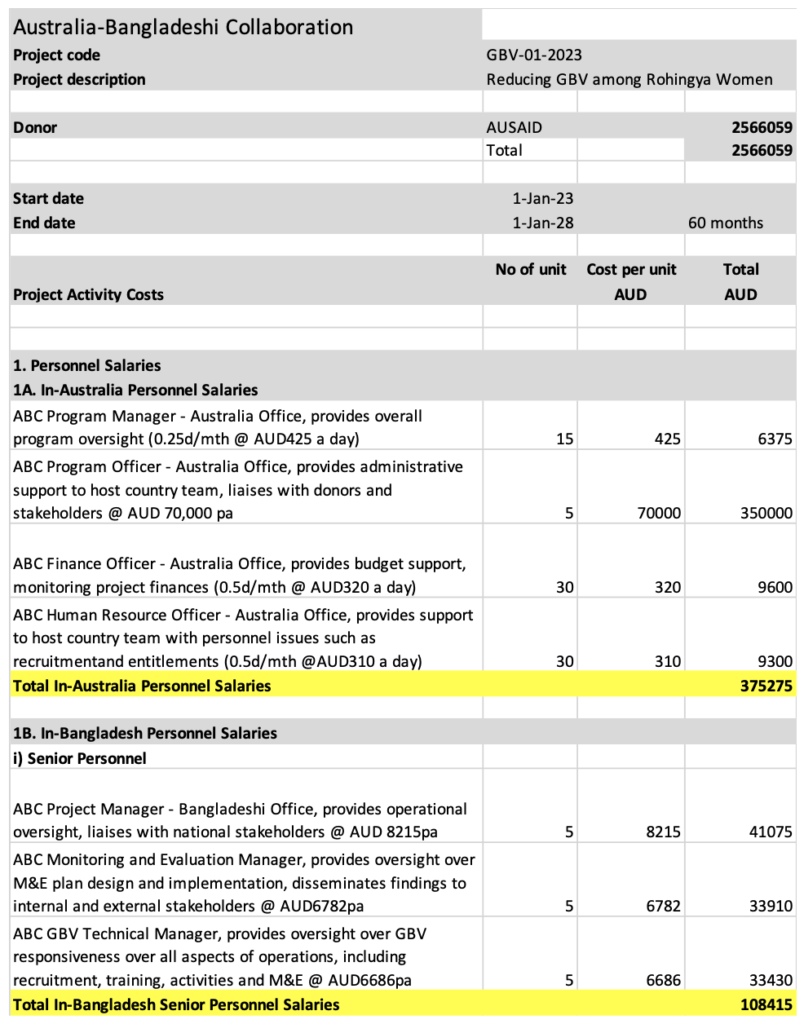
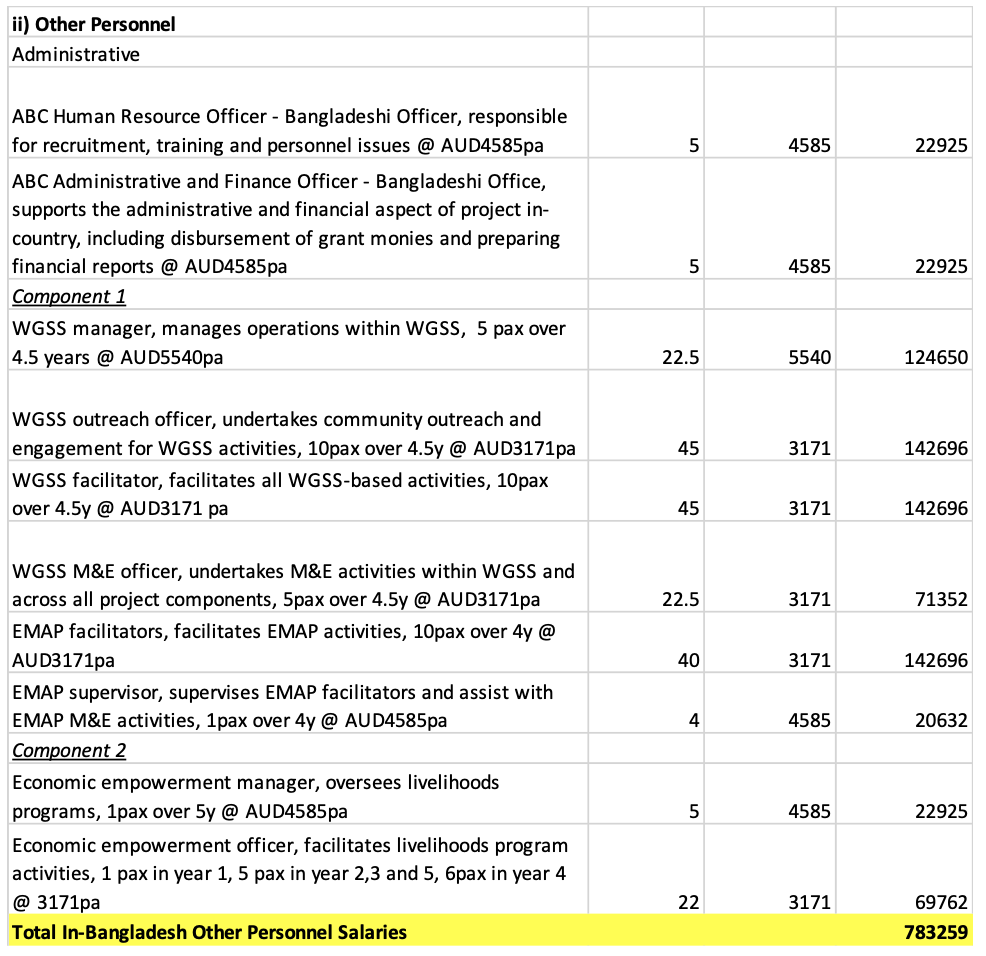
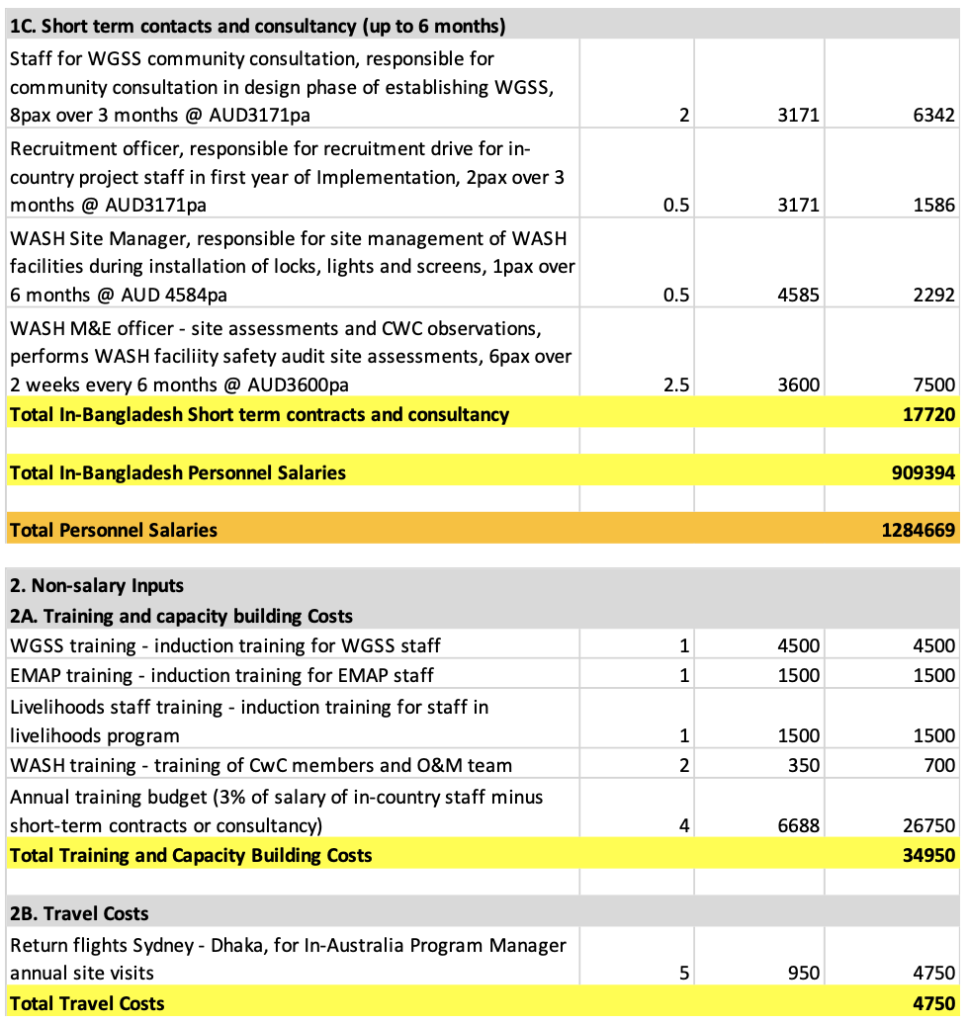
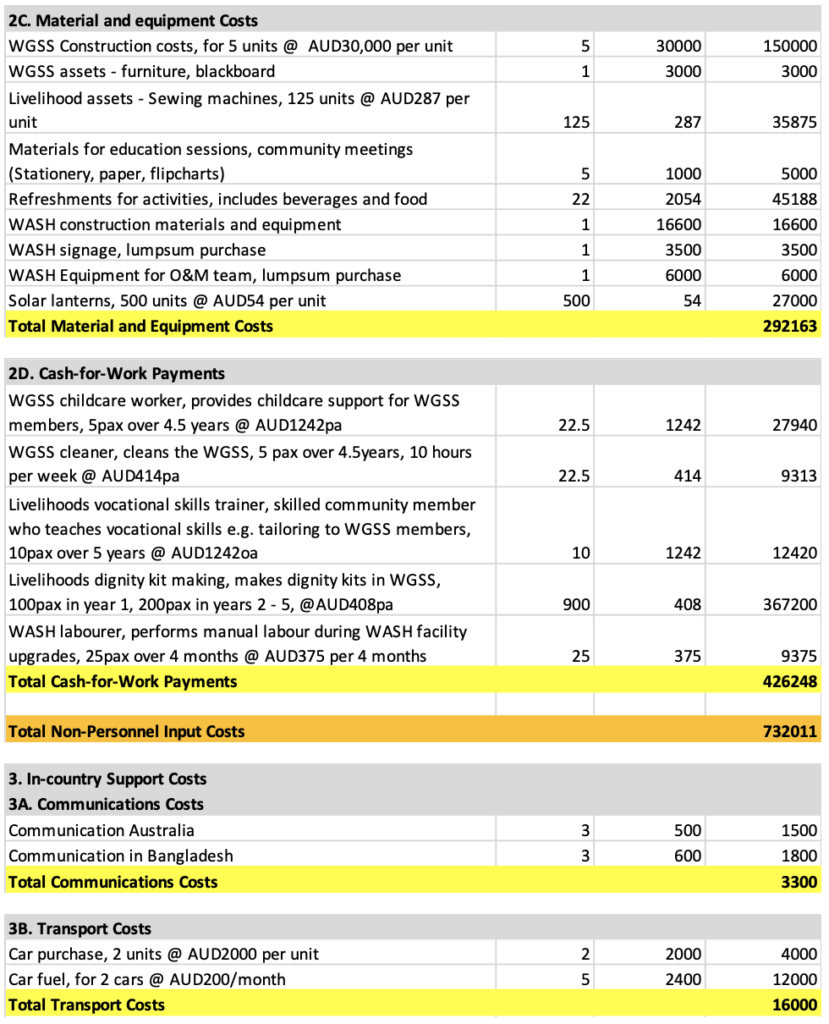
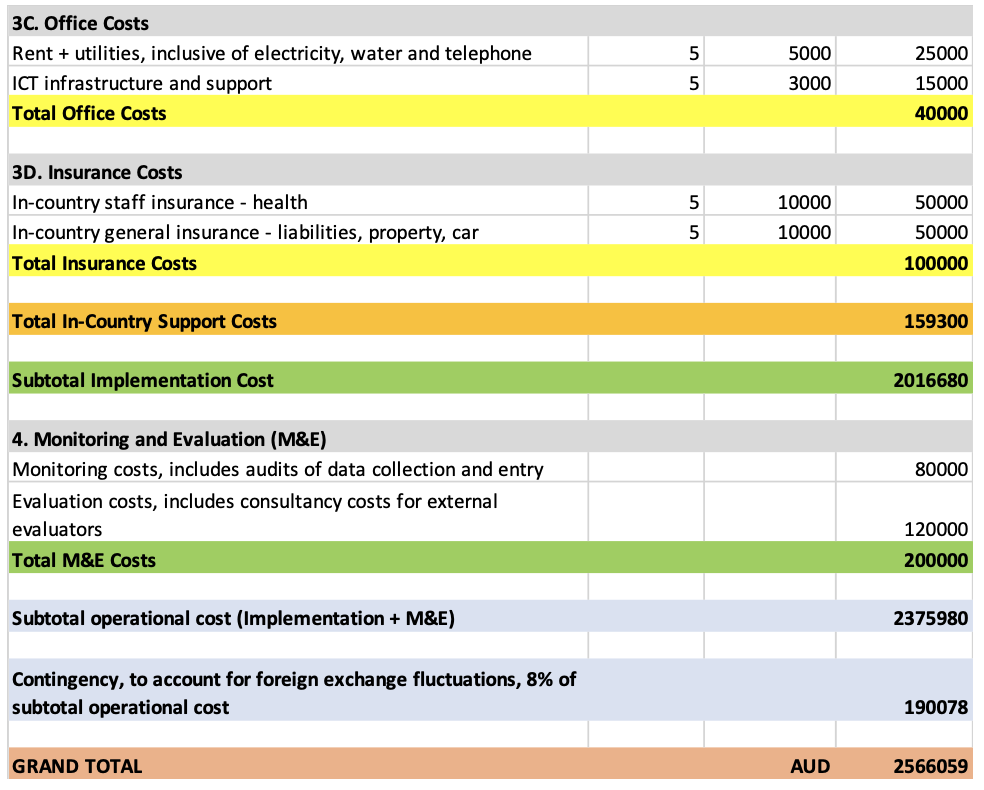
A summary of the budget is presented here. A more detailed budget can be seen in Annex F.
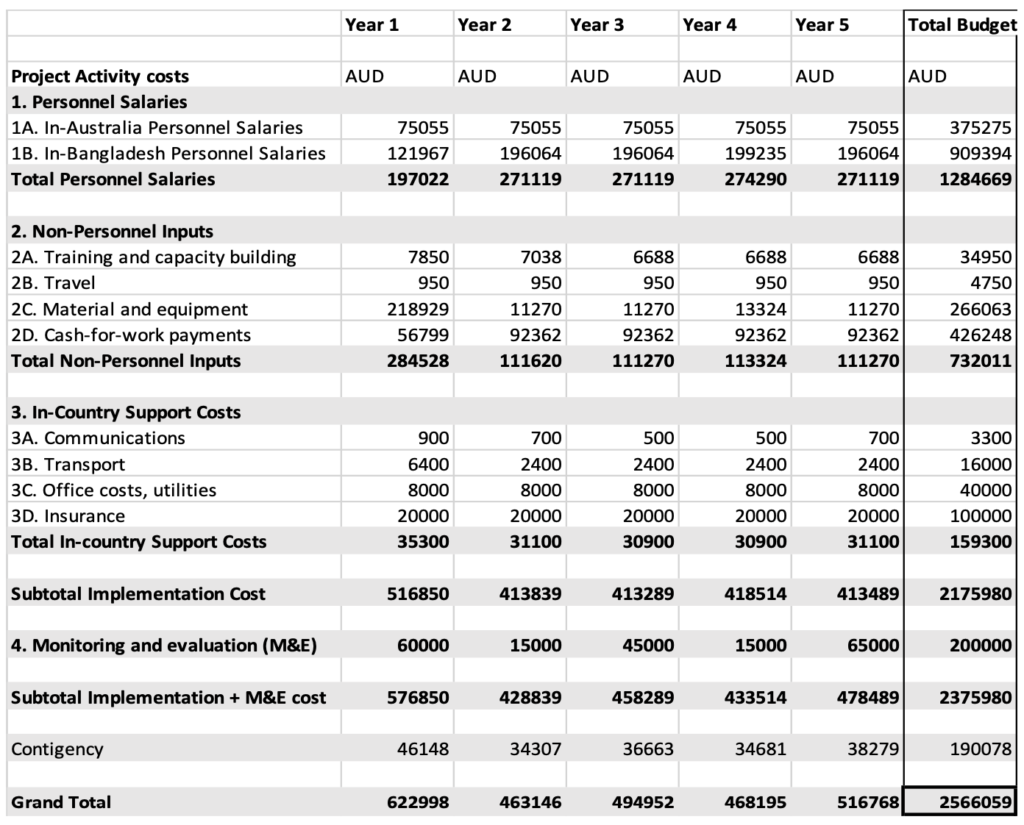
The budget assumes an exchange rate of 1 BDT = 0.0159196 AUD. Personnel in Australia include a full time Program Officer who provides administrative support to the in-country team. Personnel in Bangladesh include three full time managers, 30 WGSS staff, 11 EMAP staff and six staff involved in livelihoods programs. Training costs include an annual budget for capacity building activities. Travel costs will cover return flights between Sydney and Dhaka for the Australia-based Program Manager to attend annual site visits. Material and equipment costs include construction costs for building five WGSS and installing locks, screens, and lighting for WASH facilities, which will be incurred in Year 1. Cash-for-work payments are used to ‘employ’ Rohingya community members in livelihoods activities such as dignity kit making. Communications cost will include dissemination of monitoring and evaluation findings to stakeholders. Transport costs include the purchase of two cars and a fuel allowance. Insurance costs include staff health insurance, as well as liability, property, and motor vehicle insurance. The M&E budget will cover monitoring activities that occur throughout the project, as well as the evaluation activities that occur two-yearly. The consultancy cost for external evaluators is included. A contingency fund is included in the budget, amounting to 8% of the subtotal cost of implementation and M&E. The contingency fund will allow the project to account for the fluctuation foreign exchange rates that might affect the real value of the grant.
6.0 Annex Contents
A. Project Map
B. Problem Tree
C. Objective Tree
D. Logframe Matrix (LFM)
E. Risk Management Strategies
F. Detailed Budget
G. Activity Schedule
H. Acronym Glossary
I. Reference List
Annex A – Project Map
Annex B – Problem Tree
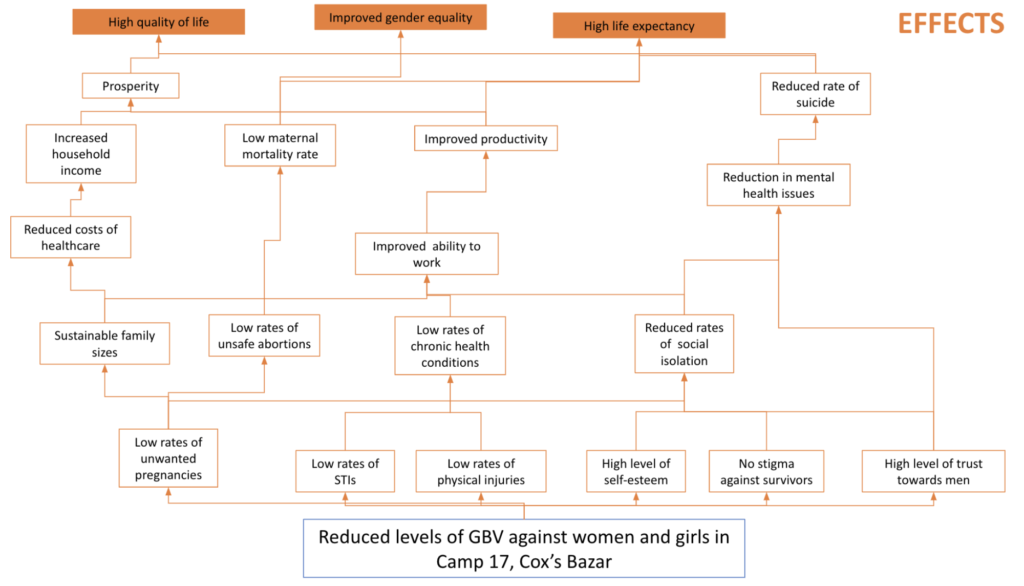
Annex C – Objective Tree
Annex D – Logframe Matrix (LFM)
| Logical Framework | Indicators | Means of verification | Assumptions |
| Goal:To reduce the prevalence of GBV against Rohingya women & girls, aged 15 – 49, in Camp 17, in Cox’s Bazar, by 30% by 2028 | Percentage of Rohingya women and girls aged 15 – 49, in Camp 17, in Cox’s Bazar who reported experience of GBV in the last 12 months, by 2028 compared to baseline. | Survey conducted within WGSS. Conducted at baseline (end of year 1) and at end of project. Independent data collection team to carry out survey. Standardised questionnaires established in consultation with GBV specialists to enable drawing direct comparisons and measuring % change. Recall period of 12 months used. | N/A |
| Purpose:1.1 To reduce social acceptance of gender inequality & GBV among Rohingya women & men , aged 15–49, in Camp 17, by 30%, by 2028; and 1.2 To increase economic empowerment of Rohingya women, aged 15–49, in Camp 17, by 30% by 2028; and 1.3 To increase proportion of Rohingya women aged 15-49 feeling safe at communal WASH facilities in Camp 17, by 70%, by 2028 | 1.1 Percentage of Rohingya women and men aged 15 – 49, in camp 17, who reported acceptability of gender inequality and GBV against women and girls, disaggregated by sex, by 2028 compared to baseline.1.2 How women aged 15 – 49, in camp 17, and their partners perceive women’s roles in household financial decision making, and household dynamics, disaggregated by gender, by 2028 compared to baseline.1.3 Percentage of HH reporting at least one female member, aged 15-49 years, feeling unsafe using communal WASH facilities in the past 12 months, by 2028 compared to baseline. | 1.1 & 1.3 Household (HH) cluster survey conducted at baseline (end of year 1) and every two years of the project. Independent data collection team to carry out surveys. Standardised questionnaires established in consultation with GBV specialists to enable drawing direct comparisons and measuring % change. Recall period of 12 months used. M&E staff responsible for analysis of all data collected.1.1 & 1.2 Gender segregated focus group discussions (FGD). Conducted at baseline (end of year 1) and every 12 months of the project, facilitated by independent GBV specialists. M&E staff responsible for analysis of all data collected. | Change in gender norms supported by community leaders and Rohingya men. Women are earning money through the CFW program and their partners’ respect their financial contribution to the HH. HH financial decisions are made jointly by women and their partner. There are no other major obstacles preventing use of communal WASH facilities by females in Camp 17 |
| Output 1:Women and girls have attended GBV awareness and women’s empowerment sessions at WGSS | # of Rohingya women and girls aged 15 – 49 from Camp 17 who have attended at least one GBV awareness and empowerment session at a WGSS in the last month. | Head count to be performed at the beginning of each program session by trainers. Program records to be updated in real-time using online systems. Analysis carried out by M&E staff every 6 months. | WGSS activities are contextual, leading to positive change in women’s and girls’ attitudes and beliefs around GBV and gender norms. |
| Activities1.1 Establish five WGSS in Camp 171.2 Run GBV awareness and women’s empowerment sessions in WGSS1.3 Train Rohingya women and girls as WGSS volunteers to lead WGSS activities | Inputs/resources for Output 1 Activities:Human resources: WGSS staff: manager, facilitator, outreach worker, childcare worker Equipment: IRC WGSS Implementation ToolkitMaterials: Materials for WGSS building (bamboo, cement, tarpaulin)Materials and equipment within WGSS (furniture, blackboard, stationery) | Suitable locations for WGSS are found within the campsite. Women and girls are allowed to attend WGSS by men in HH and there is community leader support. Women and girls engage with WGSS activities. | |
| Output 2: Rohingya men in Camp 17 have completed EMAP workshop | # of Rohingya men aged 25 – 49 in Camp 17 who have completed 16-week EMAP workshop in the last 12 months | Head count to be performed at the beginning of each program session by trainers. Program records to be updated in real-time using online systems. Analysis carried out by M&E staff every 6 months. | Men who completed the EMAP curriculum are motivated to become effective allies. |
| Activities:2.1 Introduce EMAP to community (project sensitisation sessions)2.2 Run EMAP women’s curriculum2.3 Run EMAP men’s curriculum | Inputs/Resources for Output 2 Activities: Human resources: EMAP staff: facilitators, supervisors Equipment: IRC EMAP GuidesMaterials: Stationary | EMAP is supported by community leaders and members. Men are motivated to participate in EMAP.Participants are well engaged in curricula and attend regularly. | |
| Output 3: Rohingya women in Camp 17 have attended vocational training workshops, CFW programs and/or EA$E Gender Dialogue Group (GDG) program | # of Rohingya women and girls aged 15 – 49 in Camp 17 who have completed 1 month vocational skills training in the last 12 months.# of Rohingya women and girls aged 15 – 49 in Camp 17 who have participated in CFW in the last 6 months.# of Rohingya women and girls aged 15 – 49 in Camp 17 who attend at least 5 of 8 EA$E DGD sessions with their partner in the last 12 months. | Head count to be performed at the beginning of each program session by trainers. Program records to be updated in real-time using online systems. Analysis carried out by M&E staff every 6 months. | Programs are contextual and encourage women and their partners to start communicatingabout HH financial decisions. Men have a greater acceptability of women’s contribution to HHincome. |
| Activities: 3.1 Introduce programs to community and recruit women (project sensitisation sessions) 3.2 Run vocational training 3.3 Run CFW program 3.4 Run EA$E GDG curriculum | Inputs/Resources for Output 3 Activities: Human resources: supervisor and officers; local vocational skills trainers Equipment: Projectors, sewing machines, program manuals (EA$E discussion group facilitator guides), documentation for CFW, stationary Materials: food, beverages, materials to make suitable ‘dignity kits’ (recycled cotton, elastic, beads, soap, torches, whistle, thread), CFW working contracts, CFW time sheets, CFW payroll sheets and identification cards for CFWPremises: WGSS, suitable venues for EA$E GDG | Men allow women and girls to attend programs and there is community leaders and members support.Women and their partners agree to participate in the EA$E GDG.Rohingya women are willing to become vocational skills trainers.WGSS are built as per schedule. CFW remains legal for Rohingya people. | |
| Output 4: Increased availability of safe communal WASH facilities (defined by adequate lighting, internal locks on doors and gender-segregation where applicable). | 4.1 Percentage of safe communal WASH facilities with secure internal locks, adequate lighting, and gender segregation where applicable in Camp 17 by 2028.4.2 # of CWC trained within Camp 17 in the past 12 months.4.3 Female-to-male ratio of CWC members established in Camp 17 in the past 12 months. | 4.1 HH cluster survey as described above. 4.2 Program records detailing the number of CWC established; committee members trained in Camp 17. Records to be updated in real-time using online systems. Analysis carried out by M&E staff every 6 months.4.3 Direct observation of CWC meetings at intervals of every 6 months. Data collection and analysis conducted by M&E staff. | Lighting and locks make females feel safer to use communal WASH facilities. Establishing CWC will save costs on maintenance in the long-term as voluntary participation from residents in O&M reduces dependence on outside assistance. Males will encourage and support female presence in WASH committees. |
| Activities: 4.1 Ensuring adequate lighting at WASH facilities all times of day4.2 Installing secure internal locks on WASH facilities4.3 Installation of pictorial signage and fencing at existing WASH facilities to ensure gender-segregation 4.4 Creation of CWC4.5 Train local community members in WASH facility maintenance. | Inputs/resources for Output 4 Activities:Human resources: site manager, construction staff (Rohingya locals)Equipment and materials: solar d.light lanterns, construction materials and equipment, signage, vehicle for transport, O&M training materials, equipment for O&M toolkitsPremises: facility to carry out FGDs and project sensitisation workshops, O&M training | Safety patrols are trusted WASH committee members and will not exploit position of power. Pictorial signage and screening will encourage gender-segregation and not be ignored. | |
Annex E – Risk Management Strategies
| Potential Risk (Internal) | Risk Management Strategy |
| Poor management of project | Monthly meetings held with program staff and ABC staff to discuss: community consultation and engagement, adherence to timeline, adherence to budget, staffing matters, WHS, monitoring. |
| Poor financial management of project | Perform extensive research of budget required to deliver activities of project, budget for contingency plan to allow for fluctuations in exchange rates and other unforeseen project costs. Monthly expenditures are reported to ABC Financial Officer, with adjustments made accordingly as required |
| Poor management of timeline | Perform extensive research on estimated times to complete activities within project, hold monthly meetings to track progress of activities with adjustments made accordingly as required |
| Low community engagement | Implement extensive community consultation plan in the first year of project, including engagement with religious leaders, Maji, Relief International GBV service, women, and men within camp 17 |
| Poor sensitivity from project staff & workers around discussions of GBV with survivors | Provide training to all staff on gender issues, GBV, women’s/human rights, social exclusion, sexuality and psychological first aid. Gender GBV specialists to oversee and inform project planning, design, implementation, monitoring and evaluation. |
| Change in gender norms widely opposed by community leaders and members | Organise consultation with community leaders and members, including religious leaders |
| Increased GBV incidence when Rohingya women take more prominent roles in the community and when visiting WGSS. | Implement EMAP, GBV awareness sessions, women’s empowerment sessions, and EA$E GDG to help mitigate risk. Community to appoint trusted male members of the community as patrol officers |
| Women feel stigma and/or fear reporting GBV resulting in under-reporting | Conduct extensive community consultation, implement EMAP, GBV awareness sessions, women’s empowerment sessions, & EA$E GDG to break down stigma and fear. WGSS made available for females to disclose GBV, all staff trained to support women to connect with GBV specialist service Relief International. Women assured all reports are recorded anonymously and data is stored securely. |
| Establishment of WGSS, vocational training, EA$E GDG, and EMAP opposed by community leader and members | Perform careful stakeholder analysis to identify all critical community leaders for engagement, undertake consultation with religious leaders, ensure cultural safety during community consultation and project sensitisation sessions. |
| Women and girls are prevented from attending WGSS by men in HH | Hold outreach sessions with community leaders and members to increase acceptability of WGSS, engage with religious leaders to encourage men to support women’s and girls’ attendance to WGSS. Provided flexibility for women to conduct CFW activities at home |
| Suitable locations are not found for WGSS, and EA$E GDG | Identify alternative locations to hold WGSS activities and EA$E GDG in existing structures, such as established community centres. |
| Facilitators are poorly trained and facilitates ineffectively | Provide appropriate training to all facilitators prior to commencement of activities. Provide regular professional development opportunities to EMAP, EA$E, and VS trainers facilitators; supervisors to observe facilitators in sessions at regular intervals; ensure EMAP & EA$E trainers have adequate experience in delivering training in local context; provide training to supervisor to enhance selection of suitable facilitators |
| Women and girls are not interested in WGSS activities and participants engage poorly with curricula and attend irregularly | Undertake regular consultation with WGSS members, women, and girls to determine, revise, and contextualise activities. Encourage WGSS members to be involved in running and planning of activities through staff shadowing and joining advisory committee within WGSS. Perform qualitative interview of EMAP, VS, and EA$E participants. |
| Women’s and girls’ attitudes and beliefs around GBV and gender norms remain unchanged after attending WGSS education sessions | Review content and delivery of education session, perform qualitative interview of WGSS members to explore reasons for unchanged or worsening gender norms |
| Men are not motivated to participate in EMAP and EA$E GDG | Identify influential men and religious leaders in community and engage them in promoting or participating in EMAP and EA$E GDG, undertake outreach activities among community members to improve buy-in |
| Men who completed EMAP and EA$E curriculum are not motivated to become allies or are motivated to perpetrate GBV | Review content and delivery of curricula, perform qualitative interview of EMAP and EA$E participants and community consultations to identify determinants of unintended outcome |
| Increased IPV due to change in intimate partner power dynamics as a result of women working | Implement EA$E GDG; GBV awareness sessions and women’s empowerment sessions, and EMAP |
| Women are overburden due to participating in external work in addition to household work | Provide women with choice regarding participation in CFW and hours worked (within Bangladesh regulations) |
| Malfunctioning or broken sewing machines | Purchase industrial strength sewing machines with warranty, and serviced as per recommendations |
| d.light solar lanterns sold in market for money | Advise recipients of cost of lamps to ensure they receive a good price, if sold at market. |
| Damage to d.light solar lanterns | Purchase lamps with 2-year warranties. Provide project sensitisation sessions including how to use lanterns & claim warranty. |
| Priority given to men for use of portable d.light lantern | Access to lighting is gendered, and distribution of 2 solar lamps per selected household, to reduce discussion around who has priority. |
| Appointed safety patrol officers exploiting position of authority | Community to appoint trusted male members of the CWC as patrol officers. |
| Damage to privacy screens | Environmentally resistant materials will be utilised for privacy screening. |
| Existing WASH infrastructure is inadequate to allow installation of locks or privacy screens | Budget allocated for construction of new WASH facility foundations if required, which will include locks and screens. |
| Potential Risk (External) | Activities to Manage Risk |
| Local climate of Bangladesh and natural disasters causing damage to project infrastructure | Creation of facilities in areas with low susceptibility to flooding/landslide damage; use environmentally-resistant materials; approach and liaise with international organisations to see if resources can be shared, and new infrastructure can be created. |
| Disruption from Covid-19 | Monitor and adjust programs accordingly to minimise physical contact, and put in place Covid-19 safety measures where physical contact is required (social distancing, masks); consult with GoB to ensure that GBV programming is prioritised as essential service to avoid severe disruptions. |
| Tension can occur if NGOs within camp 17 pay local workers more or less than each other | Base salaries and payments on GoB official document regarding working conditions |
| Rohingya people have no working rights | Implement CFW program and advocate for legal working rights |
| GoB sporadically seizes mobile phones & places constraints on internet access interrupting CFW mobile phone cash transfers | Make physical cash available for CFW payment in case of mobile confiscation or internet outage; safety measures in place for collection of cash |
| Rohingya do not meet ‘Know Your Customer regulations’ required for CFW program due to lack of ID | UNHCR and RRRC issue ID card to each Rohingya family on arrival; Bangladesh MoHA issue individual ID cards; the 2 cards are linked; these are acceptable forms of ID. WFP & SCOPE register biometrics of refugees and biometric data is collected by Bangladesh government officials |
| The recent GoB directive restricting recruitment of Rohingya refugees in the sanitation sector | Bangla locals will be hired for construction work if there are tightening of recruitment restrictions for Rohingya refugees. |
| Donor ceases donation of textiles and soap making materials | Maintain strong stakeholder engagement and communication with donors, seek out other donors if donations cease |
Annex F – Detailed Budget
Annex G – Activity Schedule for the Project “Reducing GBV in Rohingya Women”
Annex H – Acronyms and Abbreviations
ABC – Australian-Bangladeshi Collaboration
CFW – Cash for work
CWC – Community WASH committees
EA$E – Economic and Social Empowerment
EMAP – Engaging Men through Accountable Practice FGM – Female genital mutilation
FDGs – Focus group discussions
GBV – Gender-based violence
GDG – Gender dialogue groups
GoB – Government of Bangladesh
HH – Household
ID – Identification
IPV – Intimate partner violence
IRC – International Rescue Committee
MoHA – Ministry of Home Affairs
NGO – Non-government Organisation
O&M – Operations and maintenance
RI – Relief International
RRRC – Office of the Refugee Relief and Repatriation Commissioner SCOPE – Standing Committee on Professional Exchange
UNHCR – United Nations High Commissioner for Refugees
VT – Vocational Training
WFP – World Food Program
WGSS – Women’s and girl’s safe spaces
WHS – work health and safety
Annex I – Reference List
- Gender-based Violence [Internet]. UNHCR. 2021 [cited 6 October 2021]. Available from: https://www.unhcr.org/en-au/gender-based-violence.html
- Gender and Gender-Based Violence in Humanitarian Action [Internet]. Gho.unocha.org. 2021 [cited 6 October 2021]. Available from: https://gho.unocha.org/global-trends/gender-and-gender-based-violence-humanitarian-action
- What is gender-based violence? [Internet]. European Institute for Gender Equality. 2021 [cited 6 October 2021]. Available from: https://eige.europa.eu/gender-based-violence/what-is-gender-based-violence
- Akhter S, Kusakabe K. Gender-based Violence among Documented Rohingya Refugees in Bangladesh. Indian Journal of Gender Studies. 2014;21(2):225-246.
- What we do: Ending violence against women [Internet]. UN Women. 2021 [cited 6 October 2021]. Available from: https://www.unwomen.org/en/what-we-do/ending-violence-against-women
- GBV Trends Among Rohingya Refugees in Cox’s Bazar: COVID-19 update [Internet]. International Rescue Committee (IRC). 2021 [cited 6 October 2021]. Available from: https://www.rescue.org/report/gbv-trends-among-rohingya-refugees-coxs-bazar-covid-19-update
- Albert E, Maizland L. What Forces Are Fueling Myanmar’s Rohingya Crisis? [Internet]. Council on Foreign Relations. 2020 [cited 7 October 2021]. Available from: https://www.cfr.org/backgrounder/rohingya-crisis
- The Rohingya: Tracking the history of today’s refugee crisis [Internet]. The New Humanitarian. 2021 [cited 6 October 2021]. Available from: https://www.thenewhumanitarian.org/in-depth/myanmar-rohingya-refugee-crisis-humanitarian-aid-bangladesh
- Bangladesh: Camp Profiles – February 2020 [Internet]. UNHCR Operational Data Portal (ODP). 2020 [cited 12 September 2021]. Available from: https://data2.unhcr.org/en/documents/details/75180
- Coyle D, Sandberg-Petterson MS, Jainul MA. Honour in transition: Changing gender norms among the Rohingya [Internet]. Geneva: International Organization for Migration, UN Women; 2020 [cited 2021 Oct 10]. (Aarar Dilor Hota (Voices of Our Hearts)). Available from: https://www.humanitarianresponse.info/sites/www.humanitarianresponse.info/files/documents/files/honour_in_transition-reduced.pdf
- Toma I, Chowdhury M, Laiju M, Gora N, Padamada N. Rohingya Refugee Response Gender Analysis: Recognizing and responding to gender inequalities [Internet]. Oxford: Oxfam, Action Against Hunger, Save the Children; 2018 Aug [cited 2021 Oct 30]. Available from: http://hdl.handle.net/10546/620528
- Sang D. One Year On: Time to put women and girls at the heart of the Rohingya response [Internet]. Oxford: Oxfam; 2018 Sep [cited 2021 Oct 31]. Available from: http://hdl.handle.net/10546/620533
- UNFPA. The Inter-Agency Minimum Standards for Gender-Based Violence in Emergencies Programming [Internet]. New York: United Nations Population Fund; 2019 Nov [cited 2021 Oct 17]. Available from: https://www.unfpa.org/sites/default/files/pub-pdf/19-200_Minimun_Standards_Report_ENGLISH-Nov.FINAL_.pdf
- Vaillant J, Koussoubé E, Roth D, Pierotti R, Hossain M, Falb KL. Engaging men to transform inequitable gender attitudes and prevent intimate partner violence: a cluster randomised controlled trial in North and South Kivu, Democratic Republic of Congo. BMJ Glob Health. 2020 May 1;5(5):e002223.
- Hossain M, Zimmerman C, Kiss L, Abramsky T, Kone D, Bakayoko-Topolska M, et al. Working with men to prevent intimate partner violence in a conflict-affected setting: a pilot cluster randomized controlled trial in rural Côte d’Ivoire. BMC Public Health. 2014 Apr 10;14(1):339.
- Maureen Murphy, Angela Bourassa. Gap Analysis of Gender-Based Violence in Humanitarian Settings: A Global Consultation. The Global Women’s Institute; 2021.
- Floriza Gennari, Diana Arango, and Nidia Hidalgo. Violence Against Women and Girls (VAWG) Resource Guide: Finance and Enterprise Development Brief. The World Bank, The Global Women’s Institute, Inwe-American Development Bank; 2017.
- International Rescue Committee. Program Implementation Manual: Economic and Social Empowerment (EA$E). 2012.
- Maureen Murphy, Diana Arango, Amber Hill, Manuel Contreras, Mairi MacRae, and Mary Ellsberg Evidence Brief: What works to prevent and respond to violence against women and girls in conflict and humanitarian settings?. The Global Women’s Institute George Washington University, International Rescue Committee. 2016.
- IASC. Thematic Area Guide for: Guidelines for Integrating Gender-Based Violence Interventions in Humanitarian Action Reducing risk, promoting resilience and aiding recovery. 2015.
- Quentin Vassas aNL. Cash Working Group in Cox’s Bazar, Bangladesh: Addressing Customer Due Diligence Obligations to Promote Rohingya Financial Inclusion. World Food Program; 2018.
- Development CfG. Few Rights and Little Progress: The Rohingya in Bangladesh 2021 [Available from: https://www.cgdev.org/blog/few-rights-and-little-progress-rohingya-bangladesh.
- Committee IR. Safety First: Time to deliver on commitments to women and girls in crisis. 2019.
- Ellsberg M, Arango DJ, Morton M, Gennari F, Kiplesund S, Contreras M, et al. Prevention of violence against women and girls: what does the evidence say? The Lancet. 2015;385(9977):1555-66.
- Andrew Gibbs KB. Preventing violence against women and girls: Combined economic empowerment and gender-transformative interventions: Evidence Review. WhatWorks to Prevent Violence; 2019.
- CARE C. Cash & Voucher Assistance and Gender- Based Violence Compendium: Practical Guidance for Humanitarian Practitioners: A Companion Guide to the IASC GBV Guidelines 2019.
- International Rescue Committee. Facilitator Guide: EA$E Discussion Series. 2012.
- REACH-UNICEF, Water, Sanitation and Hygiene (WASH) Household Dry Season Follow-up Assessment: Camp 17, 2019.
- IOM Bangladesh, Needs and Population Monitoring (NPM) Round 16 Site Assessment, 2019
- UNHCR, Bangladesh: Camp Profiles, 2020.
- WEDC OI, Gender Sensitive Solar Lighting in Bangladesh, 2018.
- Bhatia A, Mahmud A, Fuller A, Shin R, Rahman A, Shatil T, Sultana M, Morshed KM, Leaning J, Balsari S. The Rohingya in Cox’s Bazar: when the stateless seek refuge. Health and human rights. 2018 Dec;20(2):105.
- Chakravadhanula K. Political Considerations of the Rohingya Refugee Crisis and its Ramifications – Refugee Research Online [Internet]. Refugeeresearchonline.org. 2021 [cited 27 November 2021]. Available from: https://refugeeresearchonline.org/political-considerations-of-the-rohingya-refugee-crisis-and-its-ramifications/
- Group WB. Cox’s Bazar Panel Survey: Rapid Follow-Up Round 2 Impacts of Covid-19 on Work and Wages in Cox’s Bazar: Part 1 – Rohingya Camps. 2020.